

AIDIS runs Last Cloudia, a mobile RPG built as a classic role-playing game for smartphones, with pixel-art characters moving through 3D spaces, a rich story and sweeping music. The game has run for six and a half years and is live in 33 countries. AIDIS also runs Critter Crew. We spoke with Takeuchi, the Last Cloudia producer, and with Arakawa, who heads marketing at AIDIS.
KPIs spread across many tools
Before ThinkingAI, Last Cloudia's KPIs lived in a BI (business intelligence) tool, in-house spreadsheets and the studio's own admin tools, so seeing one number meant pulling data from several places. The team has no dedicated data analyst, so requests went to engineers or to members who knew some of the tools. Each request meant explaining which data was needed and how it was defined, and a small mismatch could bring back the wrong data. Analysis came to depend on specific people, and the team lost time waiting for the data it wanted.
Marketing had a related problem. Ad data and in-game data were unconnected, so engineers matched player IDs by hand. The work took engineering time, invited human error and was slow enough that the team often stopped at looking at the data and never reached the next action.
Without objective data, decisions tended to follow rank, depending on who raised an idea, the producer or the director. We needed a place where anyone could use data to discuss, on equal terms, why a change should happen now.
One platform for every country
Critter Crew, another AIDIS project, used ThinkingAI first. As a new title it adopted the tool smoothly, and dashboards that tracked KPIs by country proved useful as it launched worldwide. AIDIS also wanted a single analytics tool across the company, and Takeuchi was keen on bringing Last Cloudia's scattered information together on one platform.
Arakawa calls ThinkingAI a really smart pivot tool, like a pivot table that does the hard work. In a demo, picking items with filters and splitting players into segments pulled up the data right away, even for someone outside engineering. It also connected ad data with in-game behavior, so the team could see which gacha, the game's paid character draws, players from a given ad channel paid for, using only the console.

Last Cloudia runs in 33 countries and 4 languages, and player trends and KPIs naturally differ by country. With the old tools, viewing the same data for another country could mean a different URL, a different VPN or simply a separate sheet. In ThinkingAI, the team switches countries in the console and follows the same metric.
From hours to minutes
By far the feature the team uses most is event analysis. Once a report is set up, anyone can change the dates, the period or the IDs being analyzed, so planners can pull data without asking an engineer.
One example was a feature for new players that recommends items based on how far they are in the story. With event analysis, the team saw where in the story players made purchases, which items they bought and how many. It then reworked the items and when they appear. The share of new players who pay rose sharply.
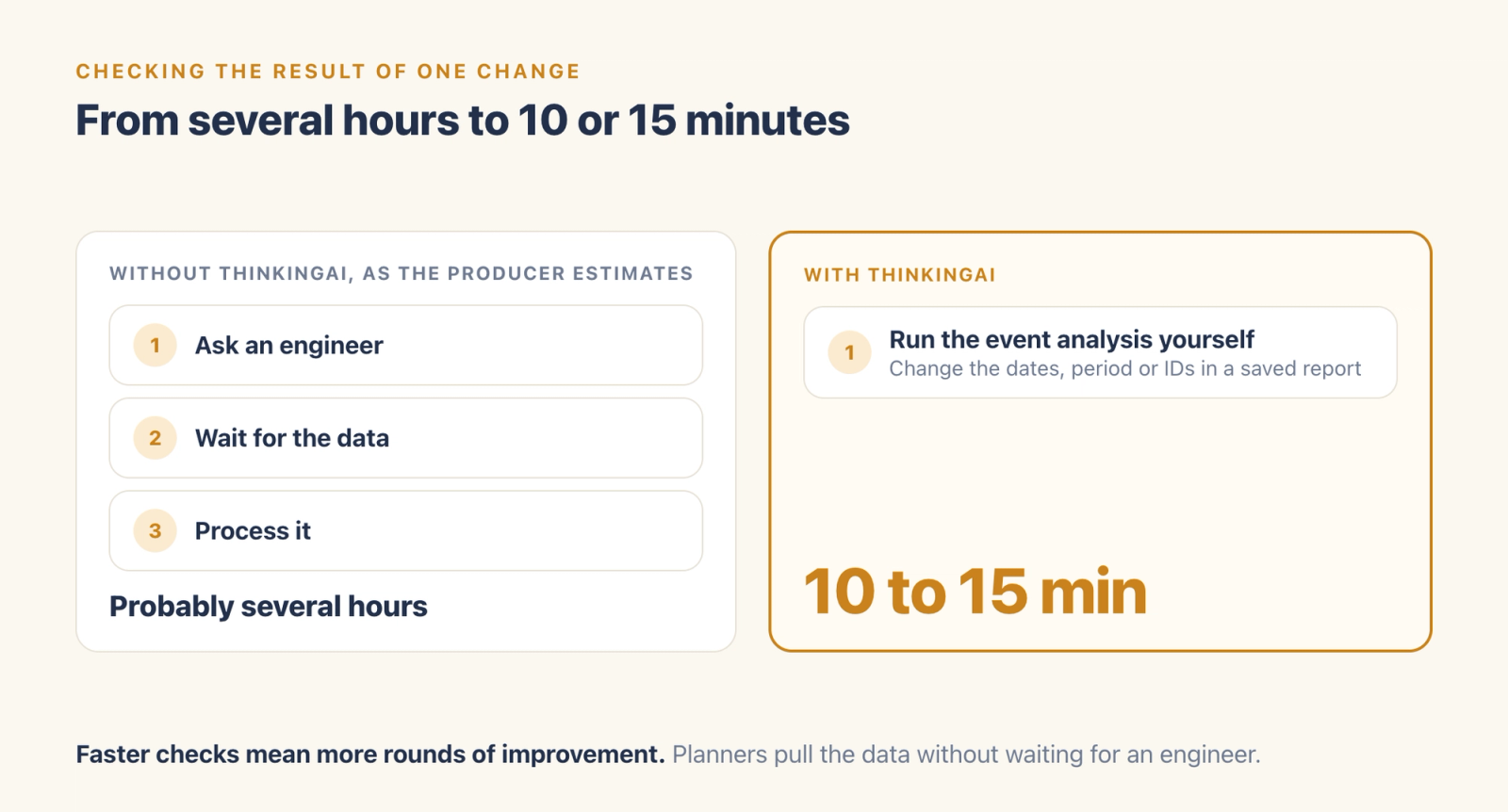
Without ThinkingAI, checking the results of even one change would have meant asking an engineer, waiting for the data and processing it, probably several hours. With ThinkingAI, the person running the analysis gets results in 10 or 15 minutes, sometimes sooner. That difference in speed decides how many rounds of improvement we can run.
Last Cloudia used to earn a large share of its revenue from a small group of heavy spenders. After the team repeated measures like the new-player feature, a wider range of players now pay, and the paying rate is clearly higher than a year earlier.
Seeing which characters players use
Arakawa's team watches the usage rate of each unit, as the game calls its characters. After six and a half years, unit abilities have grown complex, and the trends among the most used units show what players want from Last Cloudia. Marketing uses this to decide what to cover in official livestreams, in what order, and which characters appear in ad banners.
Before, a single negative social media comment could make the team hesitant to promote an item. Now the data shows whether many players actually want it, which makes those calls easier. Marketing and the game operations team also share a common view of which characters are popular today, so promotions stay consistent with the game players see now.
Getting the numbers to match
In-game data such as item use and character use was ready to analyze about two months after rollout. Matching the basic KPIs took longest. AIDIS had built its business plans on the numbers from its previous ad measurement tool, so DAU, installs and retention had to line up, including the logic for filtering out bots. The team worked through it closely with ThinkingAI support. Today one member owns ThinkingAI in house and turns requests into reports the same day or within two to three days.
What comes next
Takeuchi plans to use funnel and flow analysis more. When a new character comes out, for example, the team wants to see how many players go from the announcement to the gacha screen and then draw. Arakawa's goal is for people who never looked at numbers to check them as a matter of course, from planners and designers to back office staff.
Whenever someone is unsure about a decision, I want the first response to be, let's take a quick look at the data.
“With ThinkingAI, the person running the analysis gets results in 10 or 15 minutes, sometimes sooner.”